Live training
Fundamental course
In the introductory course, we explain the fundamentals of the GrandMA3 system. We cover everything essential for working with the console in five sessions. No prior knowledge is necessary. This course is ideal for those who want to start working with the GrandMA3.
Courses for each area
Depending on the context, some aspects of the GrandMA3 are used more frequently than others. Therefore, we have developed short courses focused on its use in theater, concerts, and live performance. A basic understanding of the console is required to follow these courses.
Specialized courses
There are topics that can be complex even for experienced professionals. In these three short courses, we'll delve deeper into networking, fixture types, and automation. A good understanding of the console and some work experience are required to follow these courses.
We offer a comprehensive program of GrandMA3 courses in Spanish and English on practical topics you can directly apply to your lighting work. If you don't find the course you're looking for or the dates don't work for you, we also offer personalized classes at amazing prices. You can book individual or group classes on the topics of your choice at times that suit you.
We work live via video conference with groups of 4 to 8 people to provide each student with the necessary attention. All you need is a computer and a good internet connection. The sessions are recorded (without students appearing on camera) so students can review details or catch up on a missed session.
All sessions of the courses in Spanish will be held between 5:00 PM and 8:30 PM in mainland Spain time. The courses are also available in English upon request. Dates and times for the English versions will be determined once there is sufficient interest.
GrandMA3
Fundamental
(5 days)
- On-line
This is the ideal course if you want to get started with lighting control or are coming from another console, including the GrandMA2. In one week, we cover all the topics you need to know to control lights and create a simple show. We cover the user interface, patching, grids, groups, light management, palettes, sequences, triggers, and effects.
GrandMA3
for Theater
(2 days)
- On-line
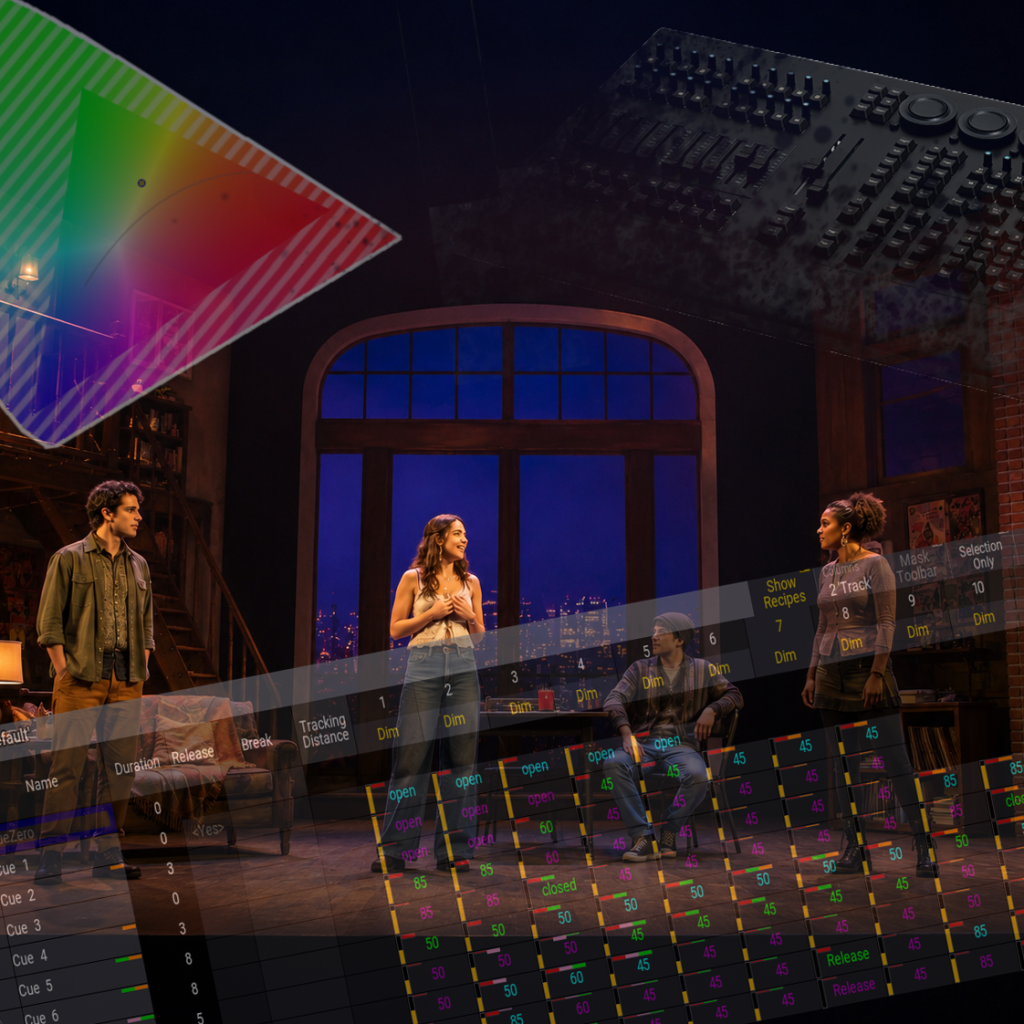
Programming a show in a theater is different from what's needed for a concert. The lighting has to support the performance without taking the audience away from the magic of the story. That's why we have to pay close attention to the details in the programming and don't need as many spectacular effects.
That's why we've created this course with a special focus on memory lists with tracking, dark motion, and individual timings. We also cover color and blade management, as well as different masters.
This intermediate-level course requires knowledge of the fundamental topics of the console.
GrandMA3
for Concerts
(2 days)
- On-line
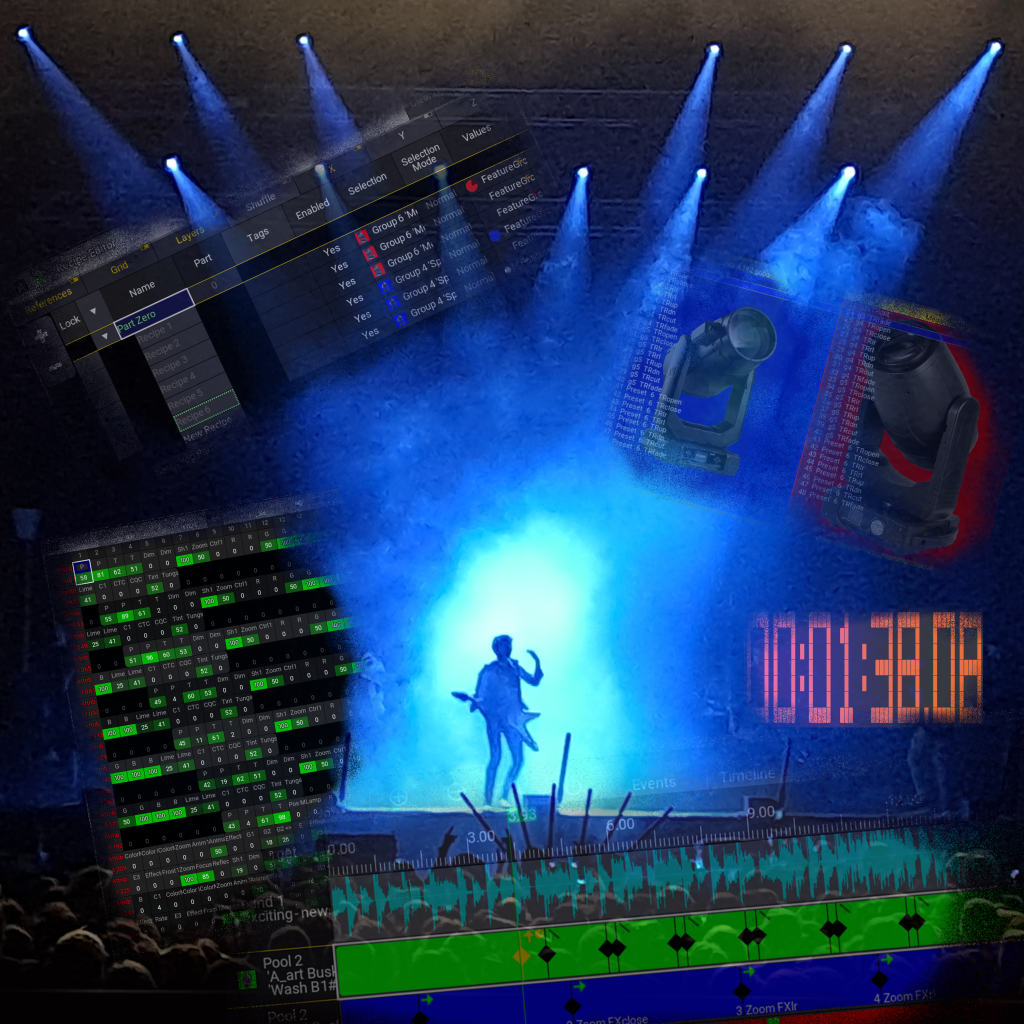
Lighting design for concerts is demanding and has special requirements. We need to create effects with a changing setlist, different fixtures in each venue, and very little time to adjust the changes. For this, a well-structured lighting plan is essential.
Therefore, in this course we cover timecode programming, pages for each song, importing patches via MVR and PSR, using conventional recipes and creating effects…
This intermediate-level course requires knowledge of the fundamental topics of the console.
GrandMA3
for Live
(2 days)
- On-line
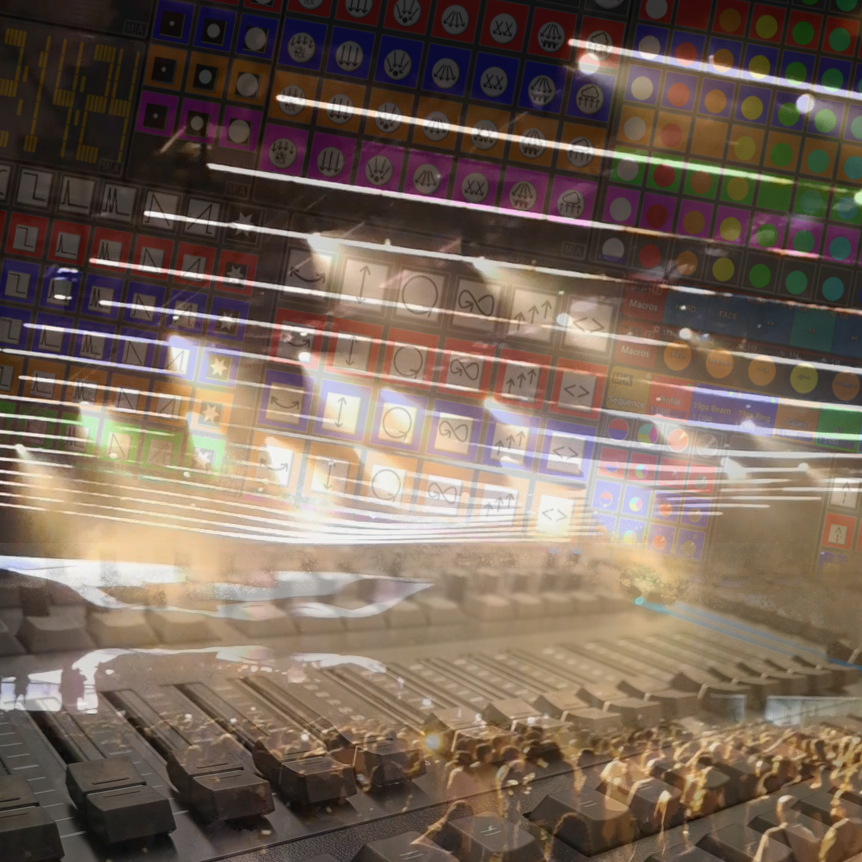
Performing by improvising live without knowing what will happen on stage is a generally underestimated discipline that often results in a disappointing show. However, the foundation of good improvisation is preparation.
In this course we will focus on the elements necessary to create a flexible show adapted to the available equipment, allowing us to react quickly to everything that happens on stage.
For this we will cover topics such as preset sequences, one-step effects, velocity and amplitude masters, input delays, bitmaps and shapes.
This intermediate-level course requires knowledge of the fundamental topics of the console.
GrandMA3
Fixture Types
(2 days)
- On-line
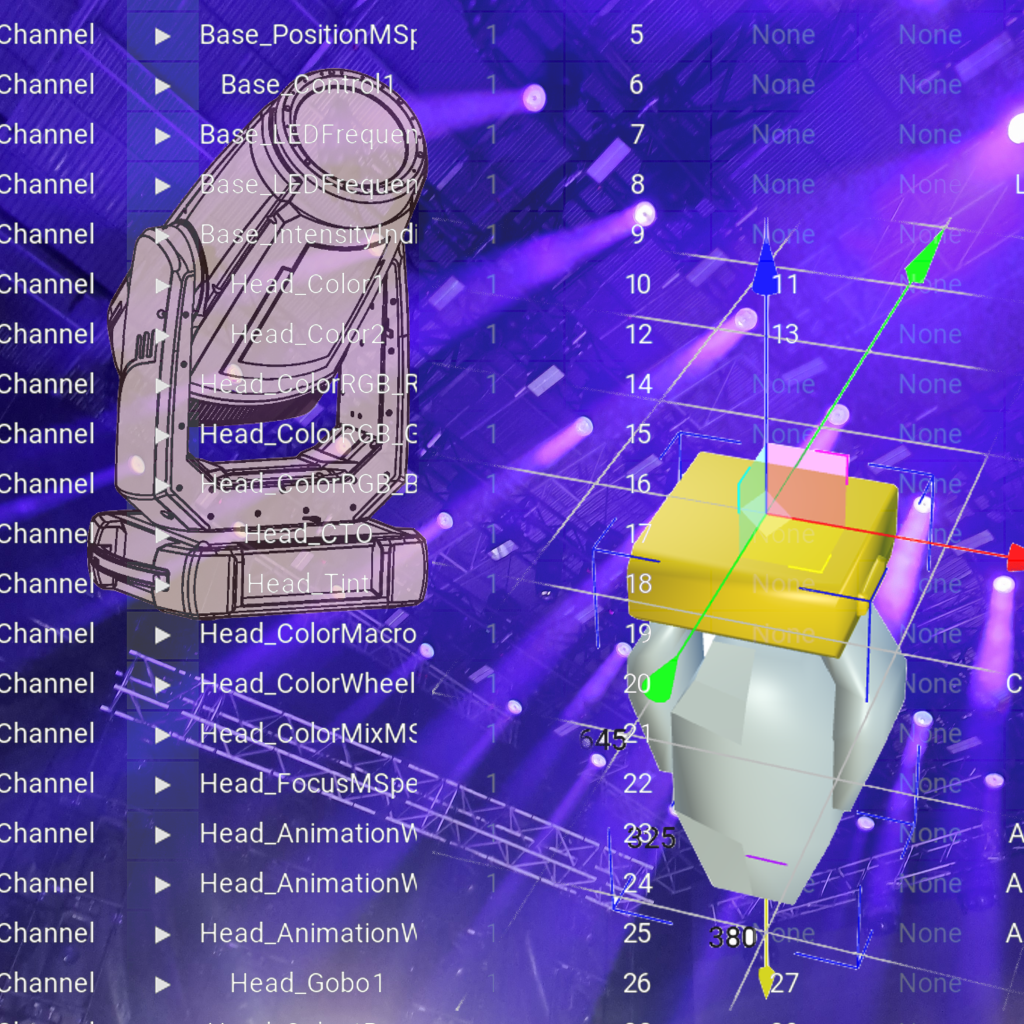
The MA3 spotlight profiles are based on the GDTF format. This is a very comprehensive format with information for CAD, preview, and management of each spotlight. However, this makes it more difficult to create and adapt the profiles to our needs. In this two-day course, we teach this entire process.
We cover topics such as geometries, instances, references, channel features, channel sets, virtual channels, wheels, default values, and relationships.
This advanced level course requires a good knowledge of the console.
GrandMA3
Phasers and recipes
(2 days)
- On-line
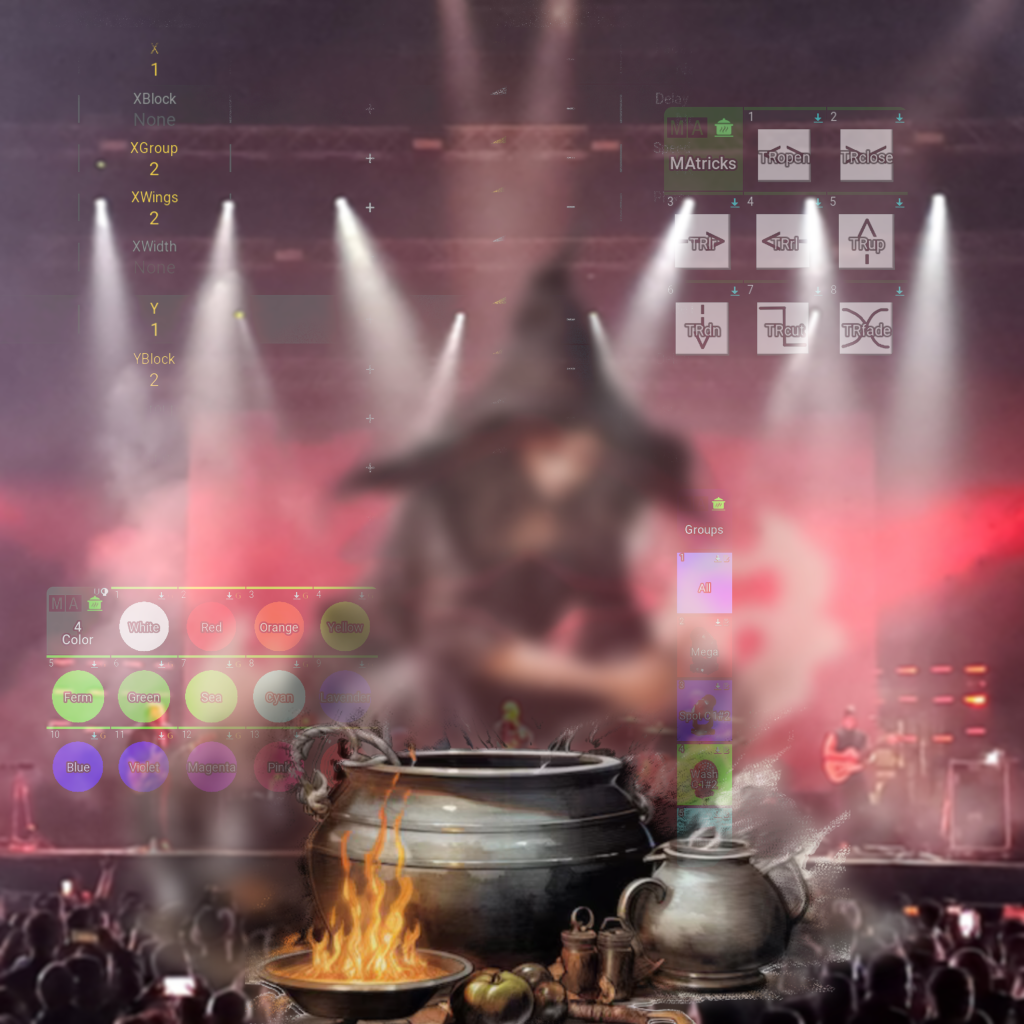
Phasers and recipes are two of MA3's standout features, and since version 2.4 they can be combined. A recipe-based show is much more flexible and can be adapted to a different setup quickly, but the process of creating a recipe-based show can be more laborious.
We evaluate the pros, cons, and tricks of various ways to program phasers with recipes, covering topics such as group management, shapes, MAtricks, adaptive playback, speedmasters, absolute values, and relative values.
This advanced level course requires a good knowledge of the console.
GrandMA3
Networks
(2 days)
- On-line
Computer networks are a necessary tool for transporting the increasing flow of signals for live performances. However, they remain a source of many problems during and even after setup.
A thorough understanding of the operation and configuration of networks is therefore of vital importance.
In this course we will explain everything you need to know to understand the potential risks of signal loss and the possible measures to avoid it, with many examples of real-world setups.
The syllabus includes TCP/IP, subnets, vLANs, redundancy, loops, Artnet, sACN, MAnet, analysis and configuration software.
This advanced level course requires a good knowledge of the console.
GrandMA3
Macros and Plugins
(3 days)
- On-line
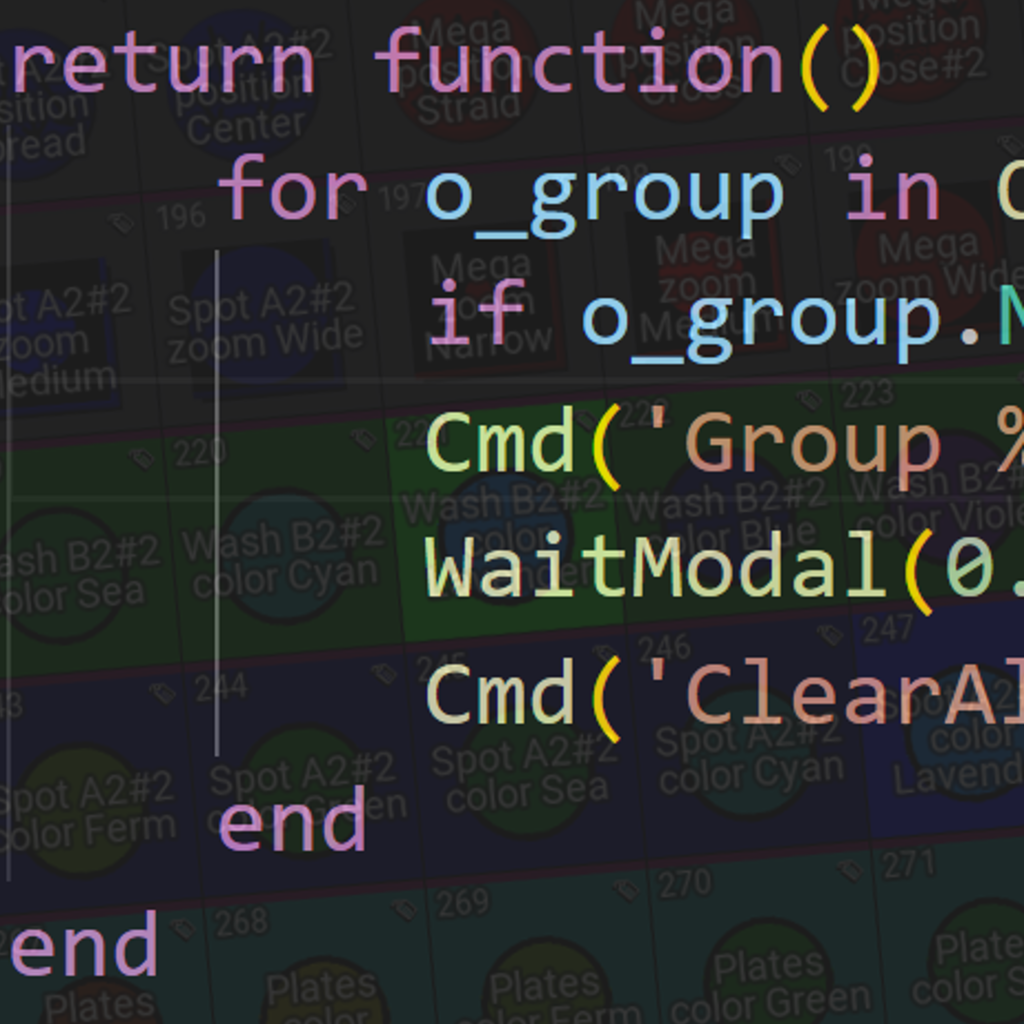
The grandMA3 software is very comprehensive, but there are still many situations where we want to automate processes with commands, macros, or plugins. In this course, we'll work with different forms of automation and learn the differences between them.
The syllabus includes MA keywords, variables, tags, commands in cues and executors, macros, lua, object free API, object API, object tree and automation organization.
This advanced level course requires a good knowledge of the console.